Israeli Exit Polls Show No Clear Winner in Pivotal Election
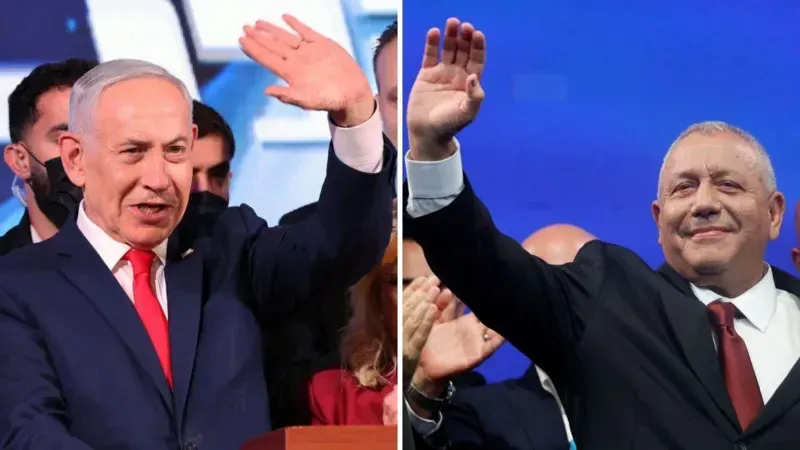
Israel’s election has ended without a clear winner, according to early exit polls. Neither veteran Prime Minister Benjamin Netanyahu nor former military chief Gadi Eisenkot appears to have enough seats to form a government alone.
Two Israeli broadcasters estimated that Eisenkot’s opposition alliance, known as the Change Bloc, would win around 51 seats in the 120-seat parliament, matching Netanyahu’s right-wing alliance. A third broadcaster gave Netanyahu’s side a small lead.
The results could depend on two Arab political parties, which are expected to win a record 18 or 19 seats. Their support could help decide who becomes the next prime minister.
Voter turnout was unusually high. The Central Elections Committee said 77.7% of eligible voters had cast their ballots by the time polling stations closed at 10 p.m. local time. This was the highest turnout recorded by that hour since 1999.
Official results were expected to begin coming in overnight. However, around 600,000 absentee votes, many cast by military personnel, would not be fully counted until Thursday.
Both sides claim hope of victory
At the headquarters of Eisenkot’s Yashar party in Tel Aviv, supporters celebrated after the first exit polls suggested his alliance could become the largest political bloc.
They chanted slogans calling for Netanyahu to leave office. Eisenkot told supporters they had made history and promised to work towards a stable government that would serve all Israeli citizens.
Former Prime Minister Yair Lapid, an ally of Eisenkot, described the results as a major defeat for Netanyahu’s alliance.
However, Netanyahu’s Likud party remained hopeful. Although early polls suggested his alliance might fall short of a majority, his party was expected to remain the largest single party in parliament.
Some Likud supporters said they were nervous but believed the final results could still change the picture.
Foreign Minister Gideon Saar, an ally of Netanyahu, warned that opposition supporters were celebrating too early. Far-right National Security Minister Itamar Ben-Gvir also urged his supporters to pray for a strong right-wing government.
As the night continued, broadcasters updated their projections. Two showed both political blocs tied at 51 seats, while another gave Netanyahu’s alliance 52 seats and Eisenkot’s side 49.
Netanyahu later appeared at his party headquarters and declared that his right-wing alliance had a strong majority. He called for the formation of a powerful right-wing national government.
Arab parties could decide the outcome
The United Arab List and the Joint List, two Arab political parties, could play a key role in deciding who forms the next government.
Arab citizens make up about one-fifth of Israel’s population. Reports of strong turnout among Arab voters may have helped the two parties win additional seats.
However, working with them could be difficult because only one political party has openly supported the idea of including them in a government.
United Arab List leader Mansour Abbas said he hoped his party and the Change Bloc would together reach the 61 seats needed for a parliamentary majority.
After Israel’s 2021 election, Abbas’s party joined a government led by Naftali Bennett and Yair Lapid. That coalition lasted about a year before it collapsed.
Joint List chairman Yousef Jabareen said his political group could not simply be ignored when leaders decide how to form the next government.
Security and war were major election issues
The election was the first since the Hamas-led attacks on Israel on October 7, 2023, and the wars that followed in Gaza, Lebanon and Iran.
Many Israelis viewed the vote as a major turning point for the country. The result could influence whether Israel continues its current hard-line, religious-nationalist direction or moves towards a different political approach.
Important campaign issues included responsibility for the security failures surrounding the October 7 attacks, the handling of regional wars, military service, changes to the courts and Israel’s standing around the world.
At polling stations, supporters of different parties continued campaigning until the final moments.
An 88-year-old voter, Zivit Abramson, told the BBC she had voted for Eisenkot because she believed Netanyahu was damaging the country.
Another voter, Claire Tugendhaft, said she supported Netanyahu because she believed he was the best person to lead Israel in its relations with the rest of the world.
Netanyahu and his allies had urged supporters to vote, warning that stronger turnout among left-wing and Arab voters could help bring an opposition government to power.
His Likud party and several other right-wing parties also asked officials to keep polling stations open beyond the scheduled closing time. Opponents viewed the request as a sign of concern about the election results.
The Central Elections Committee rejected the request, saying there was no reason to extend voting hours and that the high turnout showed strong public participation in democracy.
Forming a government could take weeks
Once the final results are confirmed, Israel’s president will consult political parties and choose the leader considered most likely to form a government.
That leader will then need to build a coalition with enough support in parliament. The process could take several weeks.
If no leader succeeds, Israel could eventually face another election.
For now, the result remains uncertain. The final vote count and the decisions of smaller parties, particularly the Arab parties, could determine whether Netanyahu stays in power or Eisenkot leads a new government.